
8 Days Lemosho Route to Climb Kilimanjaro
The Lemosho Route is considered one of the most beautiful and successful routes on Mount Kilimanjaro through 8 Days Lemosho Route to Climb Kilimanjaro. Approaching from the western side, it offers breathtaking scenery, fewer crowds, excellent acclimatization, and a high summit success rate. This 8-day version provides the perfect balance between comfort, gradual ascent, and stunning landscapes before reaching Uhuru Peak (5,895m).
Detailed Day-by-Day Itinerary
Day 1: Londorossi Gate – Mti Mkubwa Camp (2,650m)
Your adventure begins with a drive to Londorossi Gate for registration. From there, you continue to the starting point deep in the rainforest. The trek today is short and gentle, passing through lush, moss-covered forests that feel like a tropical paradise.
Wildlife sightings—like colobus monkeys—are common. Arrive at Mti Mkubwa (Big Tree) Camp for dinner and overnight.
Day 2: Mti Mkubwa Camp – Shira 1 Camp (3,610m)
Leave the forest behind as the trail climbs steeply into the heather and moorland zone. The vegetation thins, and wide views open across the Shira Plateau—one of the most scenic geological features on Kilimanjaro.
You arrive at Shira 1 Camp, located on the western edge of the plateau, where the air is crisp and the night skies are spectacular.
Day 3: Shira 1 – Shira 2 Camp (3,850m)
Today is an easier day, allowing for gradual acclimatization. You cross the beautiful Shira Plateau, a vast and dramatic landscape formed by ancient lava flows.
Arrive at Shira 2 Camp, where you enjoy panoramic views of Kibo and Mount Meru. The afternoon can include a short acclimatization walk to higher elevation.
Day 4: Shira 2 – Lava Tower (4,630m) – Barranco Camp (3,960m)
This is one of the most important acclimatization days. You ascend steadily to Lava Tower, a striking volcanic formation. Lunch is served here at 4,630m—your highest point so far.
Afterward, you descend through the Great Barranco Valley, filled with giant senecio plants and dramatic cliffs.
Arrive at Barranco Camp, one of the most picturesque campsites on the mountain.
Day 5: Barranco Camp – Karanga Camp (4,035m)
The day begins with a fun and exciting scramble up the famous Barranco Wall. Although it looks intimidating, the climb is safe and doable with guides assisting you.
After conquering the wall, enjoy gentle ups and downs across alpine ridges before reaching Karanga Camp, a crucial acclimatization stop. The camp offers stunning views of Kilimanjaro’s southern glaciers.
Day 6: Karanga Camp – Barafu Camp (4,640m)
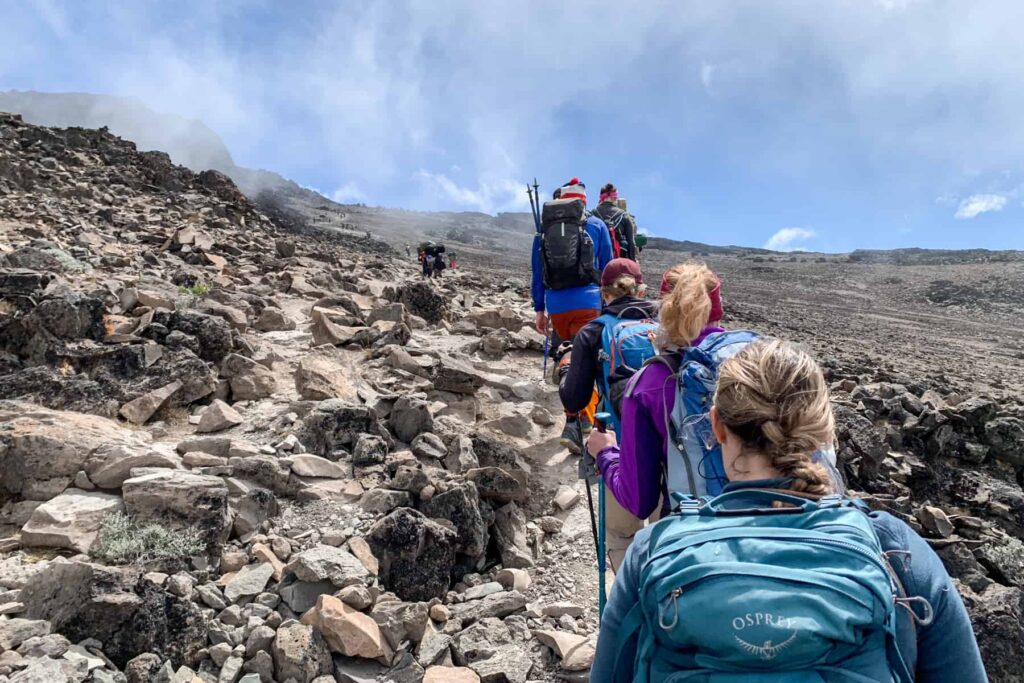
Today’s trek is shorter but steeper as you ascend toward Barafu Camp, your base for the summit attempt. The landscape becomes increasingly barren and rocky, with strong winds and colder temperatures.
You reach Barafu in time for an early dinner and rest. From here, you can see both Kibo and Mawenzi peaks—an inspiring sight before summit night.
Day 7: Barafu – Uhuru Peak (5,895m) – Mweka Camp (3,100m)
Your summit push begins around midnight. A slow, steady pace takes you up steep switchbacks toward Stella Point (5,756m) on the crater rim. From there, a gentle path leads to Uhuru Peak, the highest point in Africa.
Celebrate your achievement with sunrise views above the clouds.
Descend to Barafu Camp for a short rest, then continue down to Mweka Camp, surrounded by lush forest.
Day 8: Mweka Camp – Mweka Gate – Hotel
Your final descent passes through the beautiful rainforest, often muddy but full of birdlife. On arrival at Mweka Gate, you receive your Kilimanjaro Summit Certificate.
A K & G Tanzania Travel Specialist driver transfers you to your hotel in Moshi or Arusha for a hot shower and well-earned rest.
✓ Tour Includes
Mountain Services
Professional, certified English-speaking mountain guides
Assistant guides, experienced porters, and cook
Daily briefing and safety monitoring by the lead guide
Rescue fee and Kilimanjaro National Park mountain authorities support
Accommodation & Meals
Hut accommodation on the Marangu Route (Mandara, Horombo, and Kibo huts)
All meals on the mountain (breakfast, lunch, and dinner)
Drinking water (boiled and filtered)
Hot water for washing daily
Fees & Equipment
Kilimanjaro National Park entrance fees
Hut accommodation fees
Conservation and camping fees
All government taxes and levies
First aid kit and emergency oxygen (carried by guides)
Transfers
Pick-up and drop-off from your Moshi or Arusha hotel
Ground transport to/from Marangu Gate
Gear Provided (Shared Use)
Dining tent (where applicable)
Tables, chairs, cooking equipment
Utensils and cutlery
Support Before & After Trek
Pre-trek briefing
Luggage storage at your hotel
Certificate of achievement (summit certificate)
✘ Tour Excludes
Personal Expenses
Personal trekking gear (clothing, boots, sleeping bag, etc.)
Personal snacks, energy bars, and drinks
Travel & Medical
International and domestic flights
Tanzanian visas
Travel insurance (highly recommended)
Medical insurance
Medication and personal first aid items
Tips & Optional Costs
Tips for guides, porters, and cook (customary on Kilimanjaro)
Additional nights in hotels before/after the trek
Optional excursions or transfers not mentioned in the itinerary
Other Exclusions
Portable oxygen tanks for personal use (available at extra cost)
Personal porter above standard baggage allowance (if needed)
Laundry services